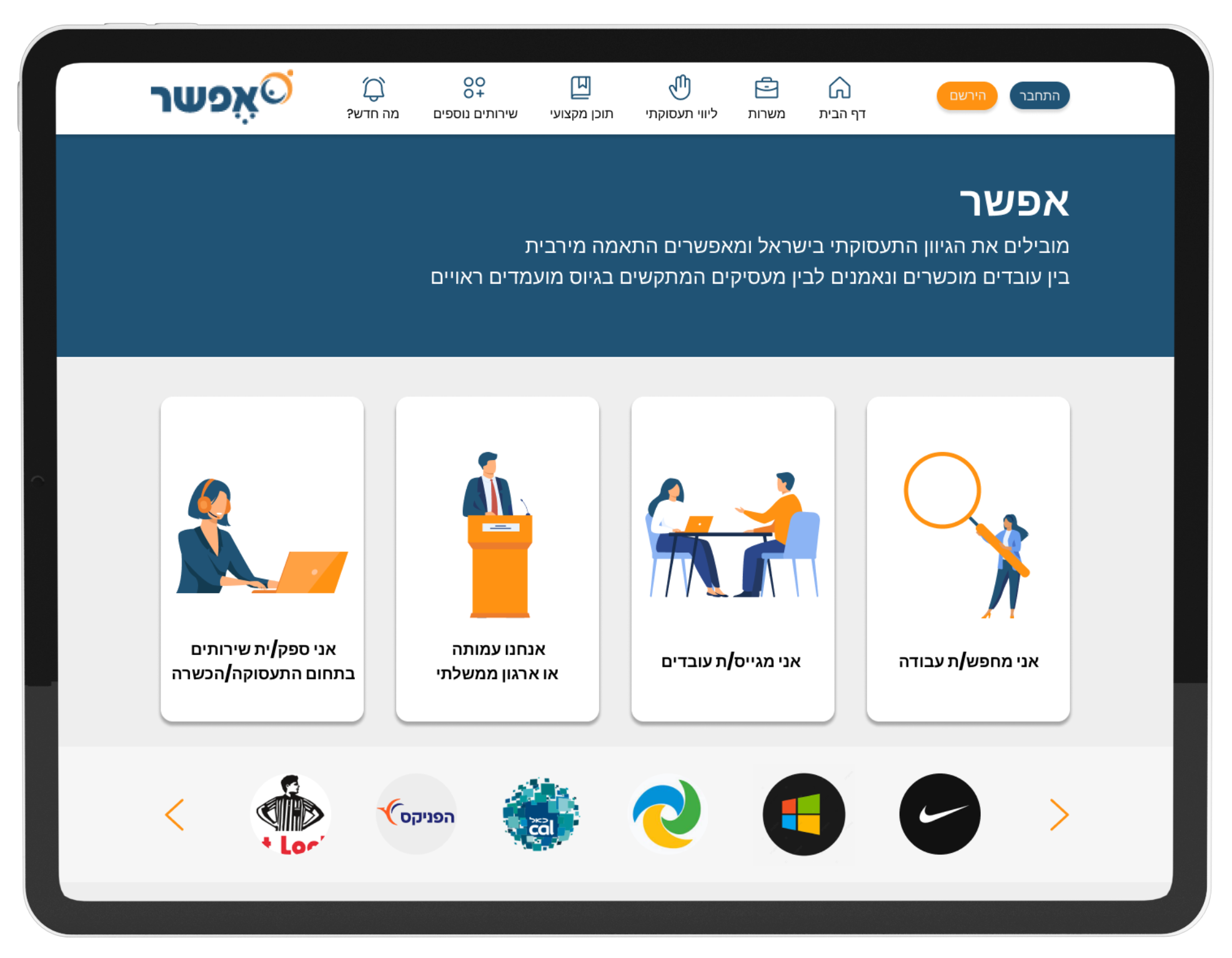
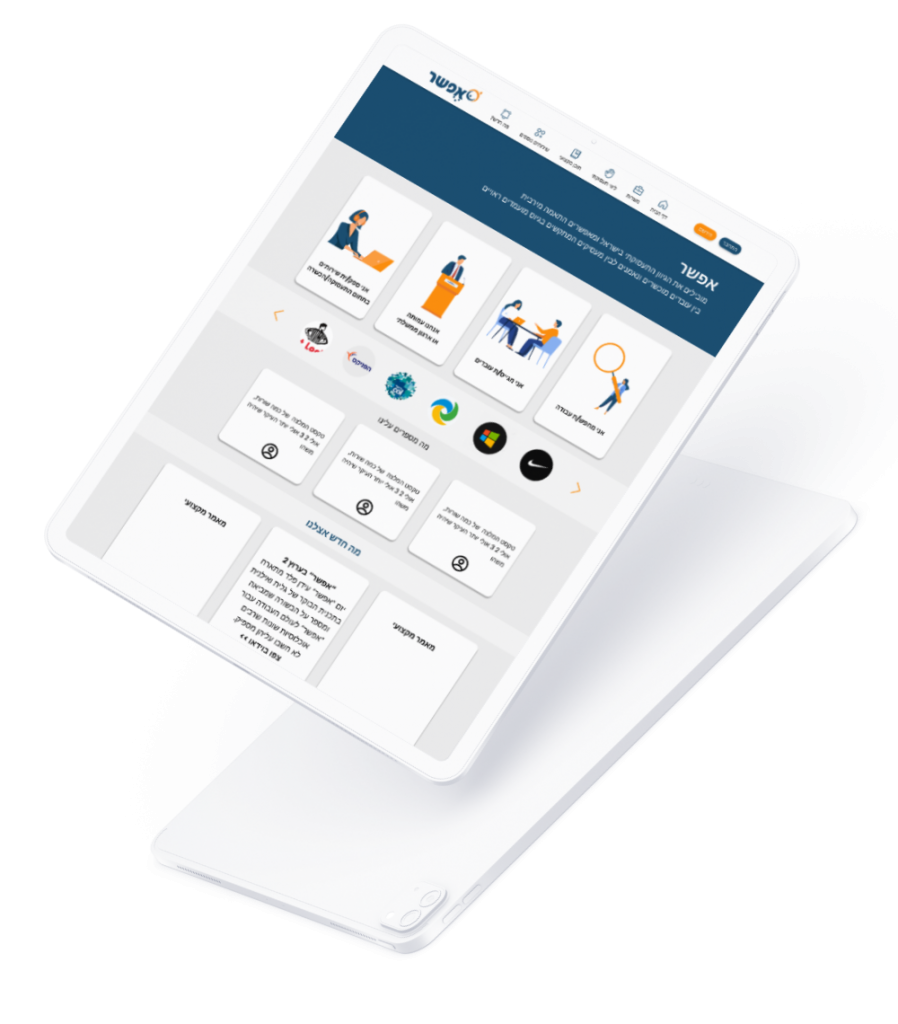
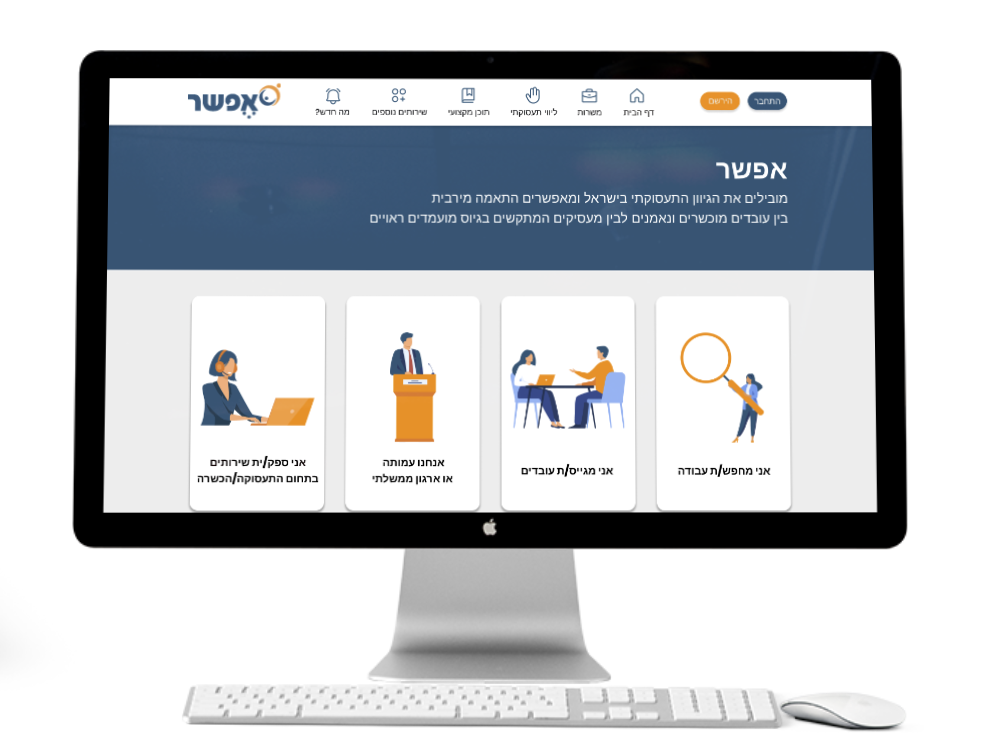
I joined the project as a UX Designer and soon took the lead role. My responsibilities included maintaining clear communication between the project lead and the design team.
I focused on defining the four main areas of the product and designed various solutions tailored to meet the needs project’s goals and user requirements.
Project Overview
EFSHAR is an innovative employment application that connects employers with diverse candidates from underrepresented populations in the labor market. It streamlines the job search process by bringing together employers, placement agencies, guidance counselors, and trainers into a single network.
This is a user-friendly application that offers an intuitive interface, a streamlined process for job seekers, and a collaborative ecosystem that fosters inclusivity and empowers underrepresented communities to thrive in the job market.
By bridging the gap between employers and diverse talent pools, EFSHAR promotes equal opportunity, facilitates meaningful connections, and ultimately drives a more diverse and inclusive workforce.
ROLE
UX Designer
TOOLS
Figma
Affinity Designer
TIME LINE
2022
ROLE
UX Designer
TOOLS
Figma
Affinity Designer
TIME LINE
June 2022
The Problem
Disadvantaged and marginalized populations do not get equal opportunities in the labor market in Israel. A large part of the potential workforce in Israel does not actually participate in employment. There is great difficulty for employers in reaching the relevant candidate from disadvantaged and marginalized populations quickly and efficiently and lack of access to information about diversity and inclusion.
The Solution
A platform that makes diverse candidates accessible to employers in a simple and effective way for both parties, adapted to the modern employment market and the needs of both parties.
The goal of the platform is to integrate disadvantaged populations into the labor market, reduce social gaps and empower them by allowing them independence, a positive job search experience, and improving their economic situation.
Candidate's resume update process
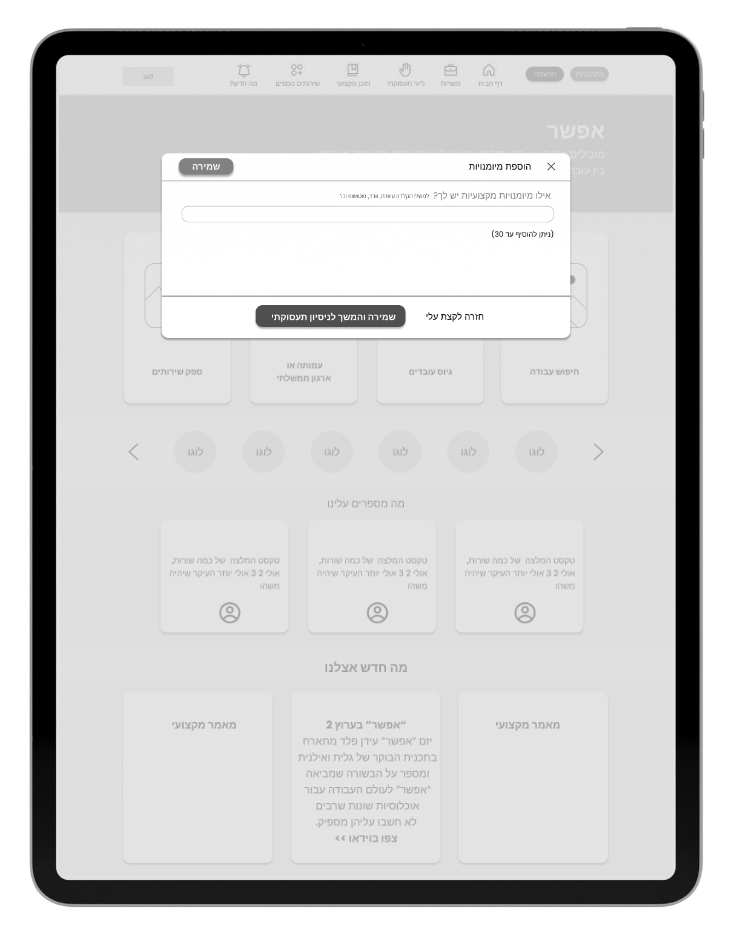
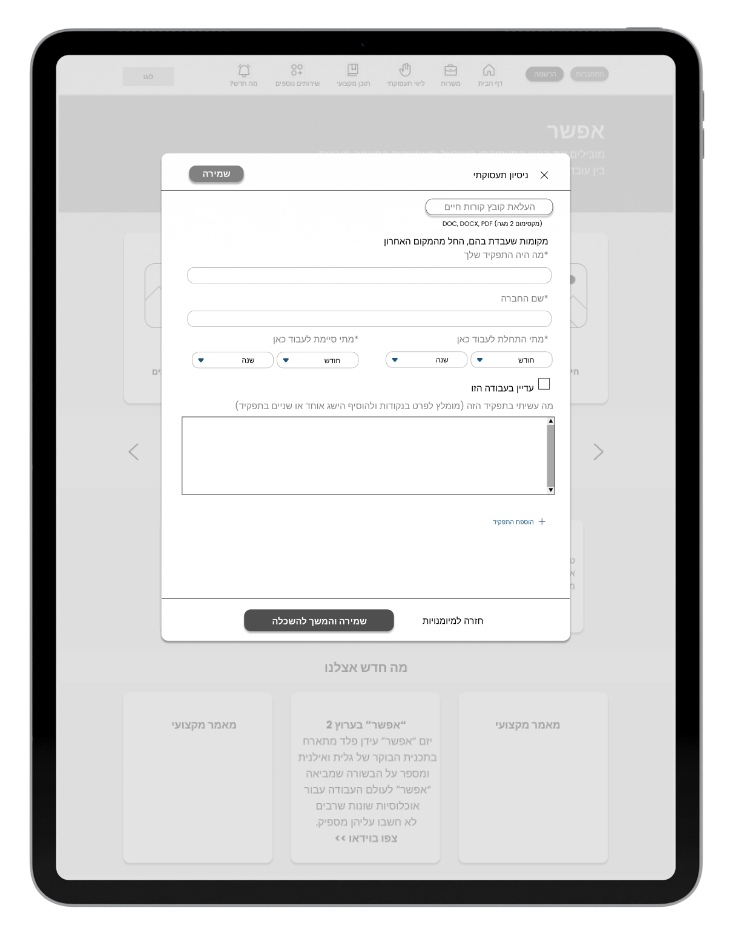
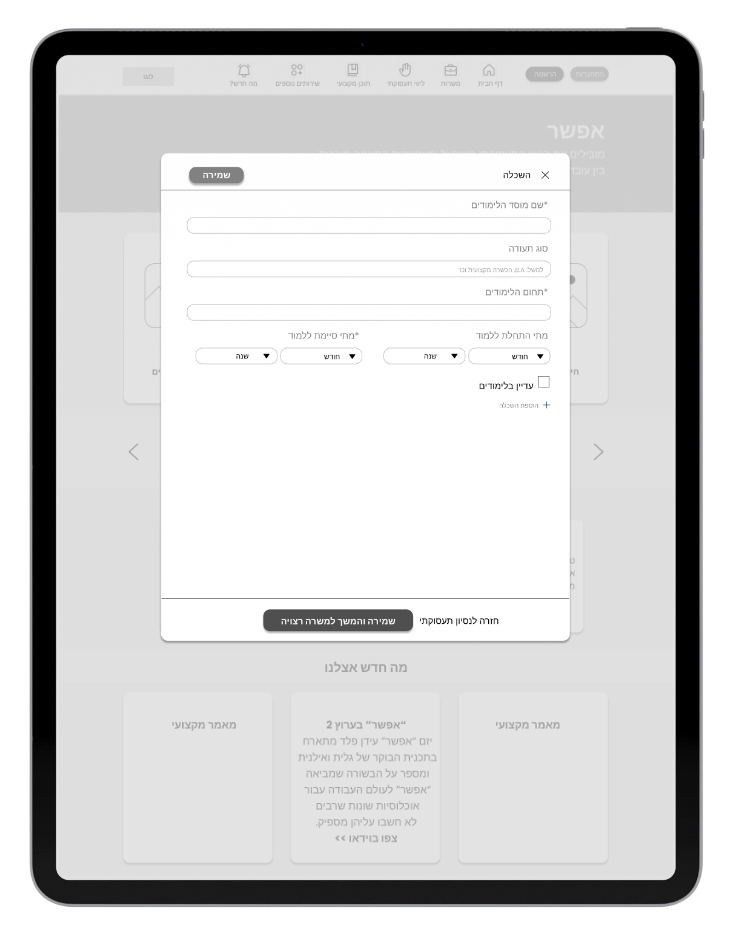
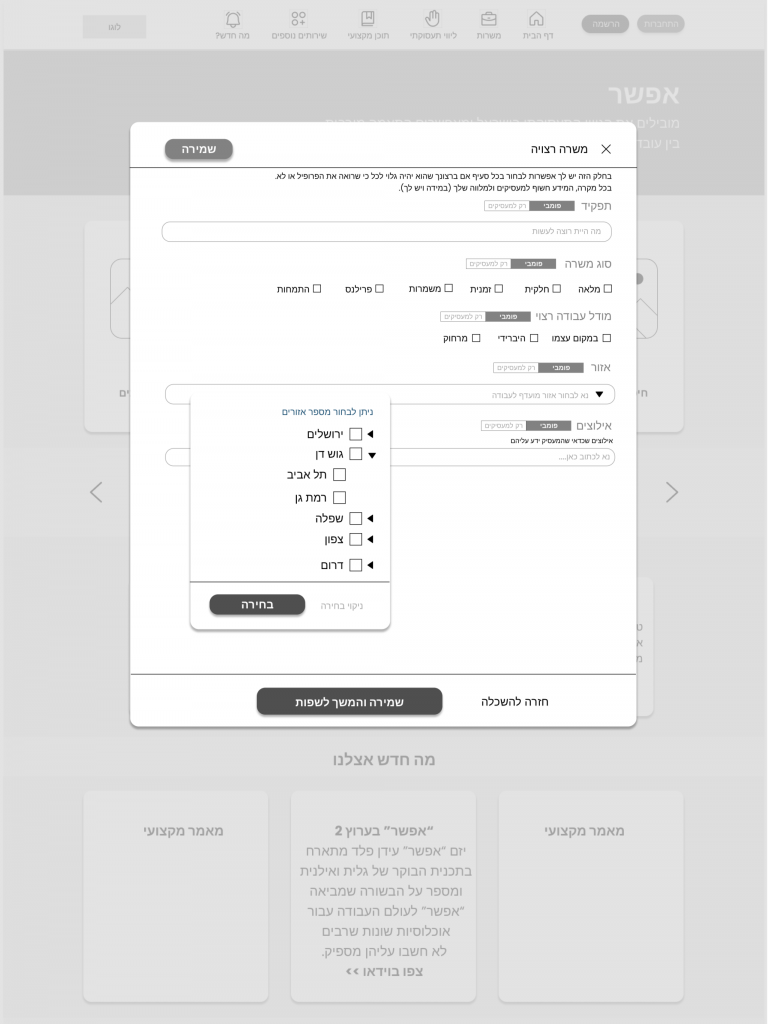
For the system to make an accurate match between a candidate and a job, candidates should fill out their resumes with as much information as possible. Furthermore, I considered the population’s characterization, since they may not be able to fill out all the details at once.
Based on that I decided on 3 things:
1
1
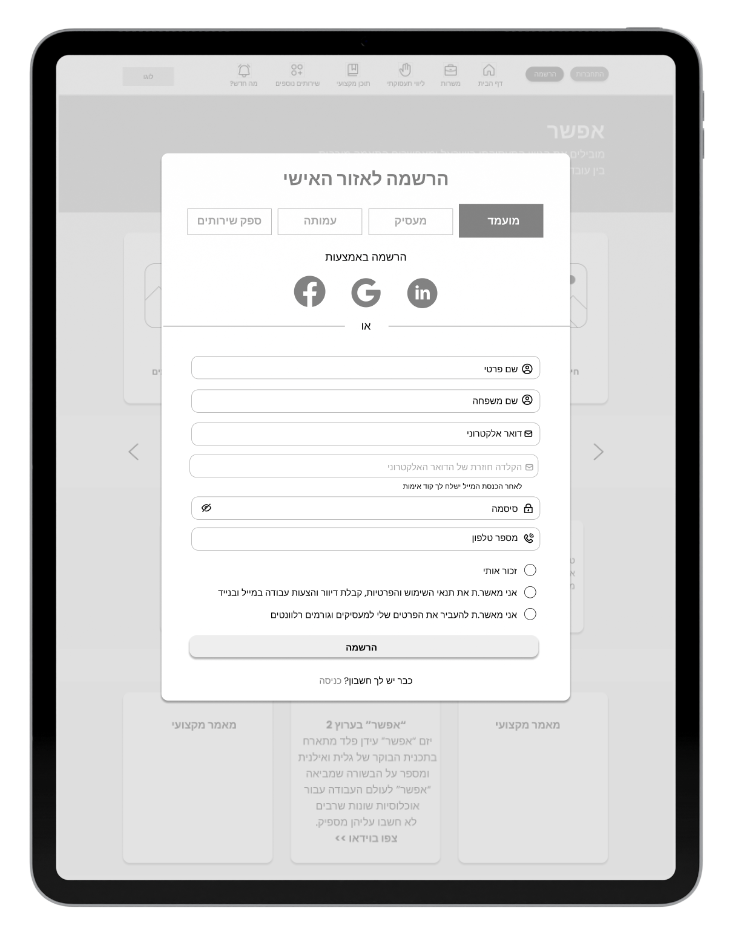
Integrate the resume process after the registration form to encourage candidates to fill out their information.
2
2
During each phase of the process, candidates can save information so they can return when they are ready.
3
3
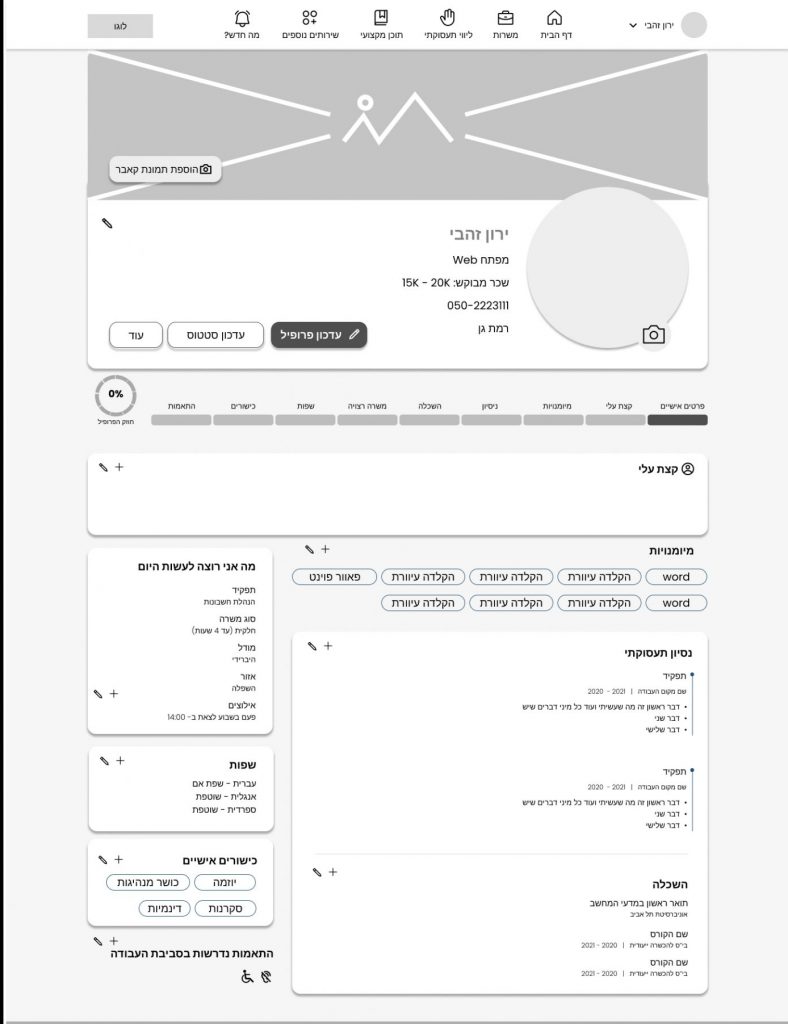
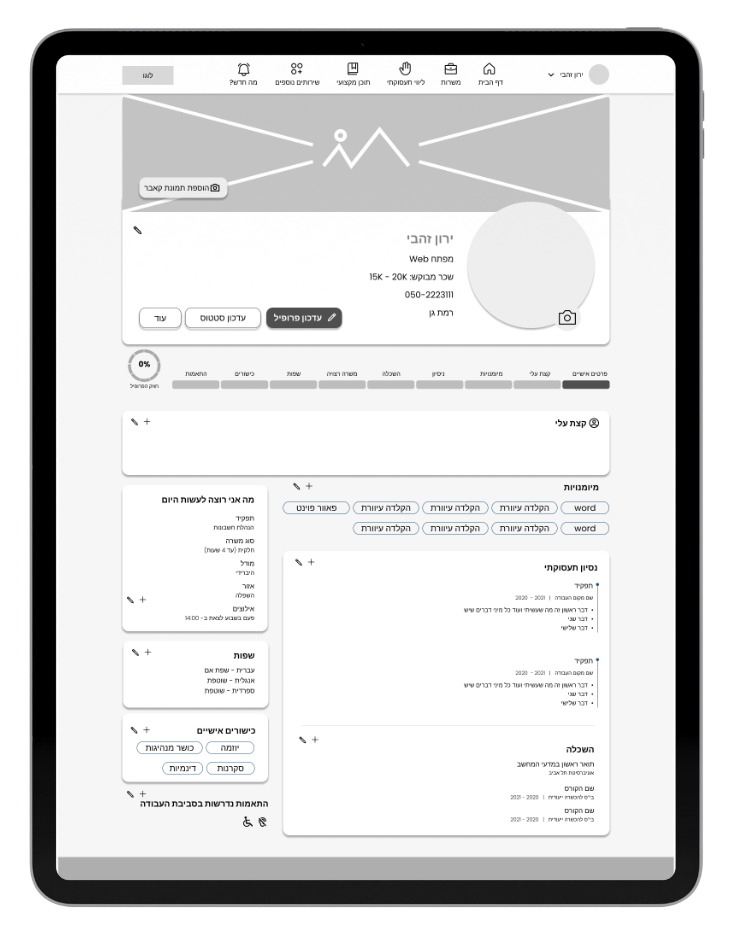
A progress bar will be on the personal profile to let the candidate know what information is missing to get a better result.
The design thinking of the process involved the following steps:
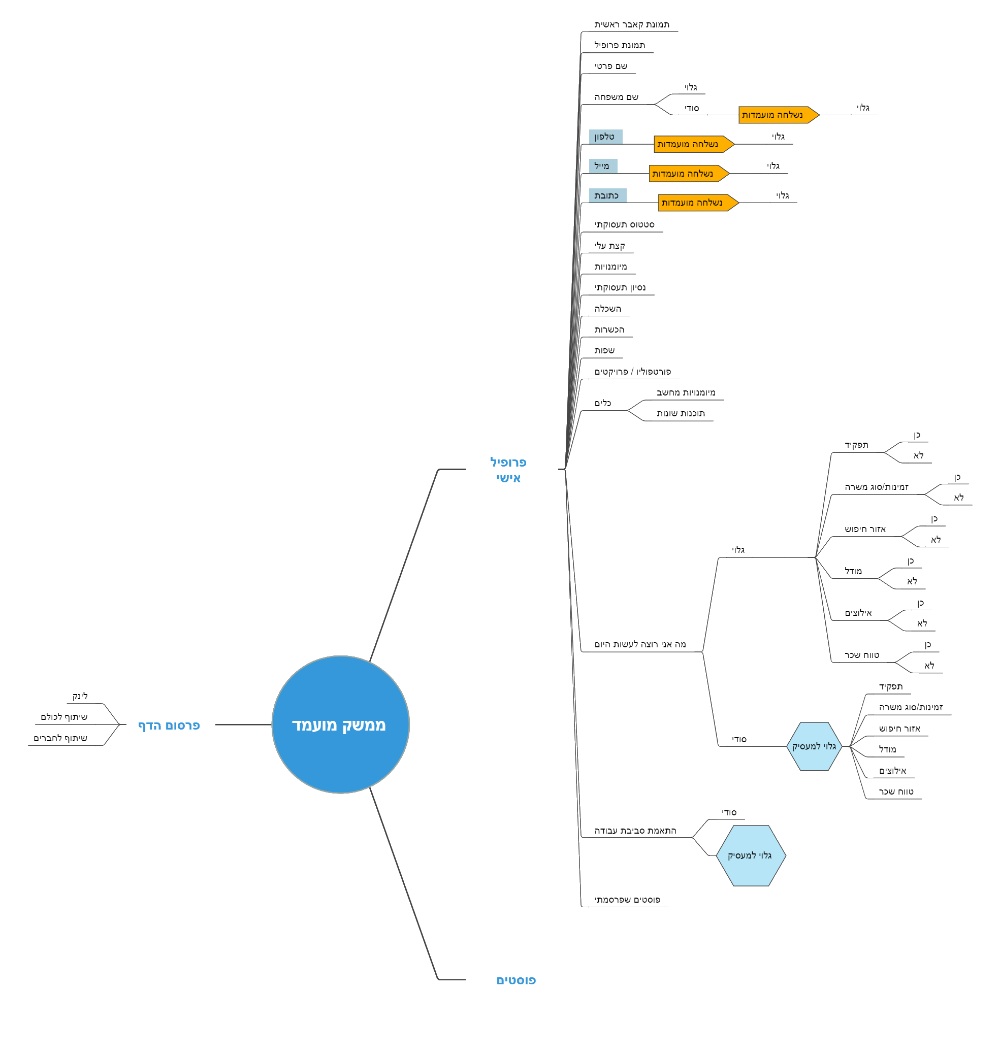
Step 1: Mapping the stages
Based on my research, I figured out how I want to gather the information and what type of form to use.
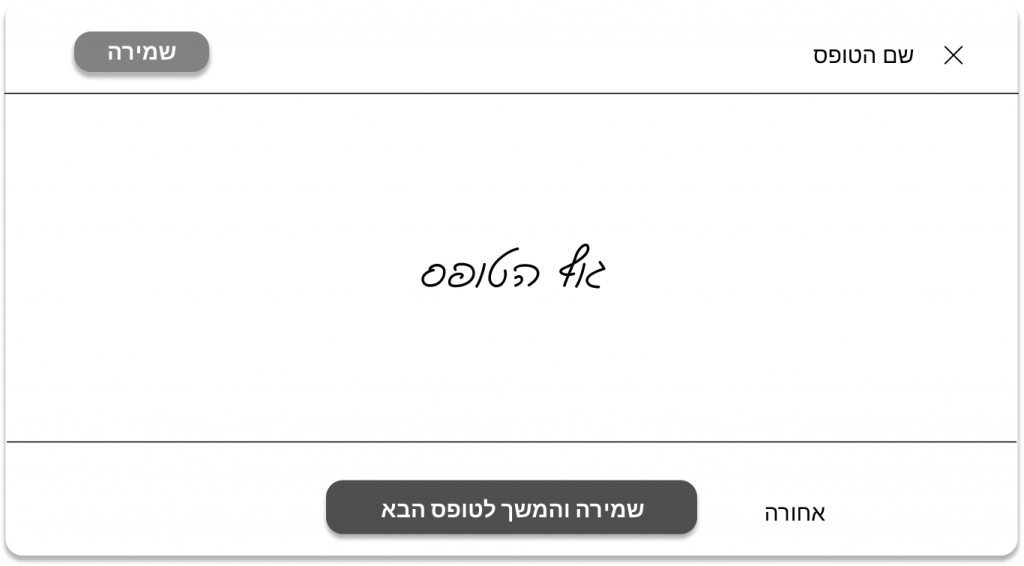
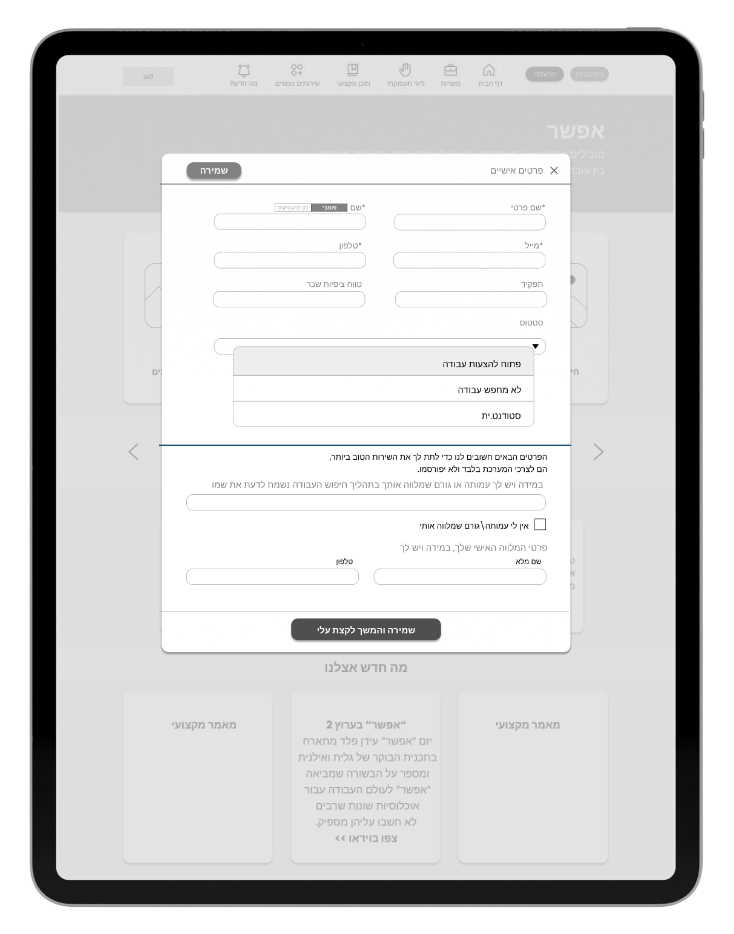
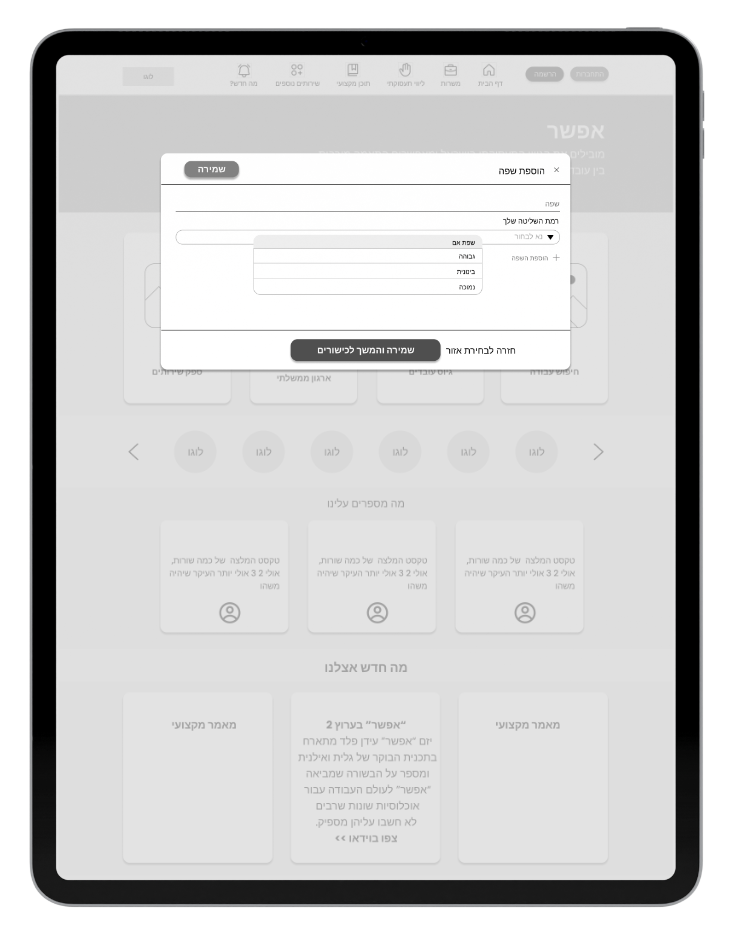
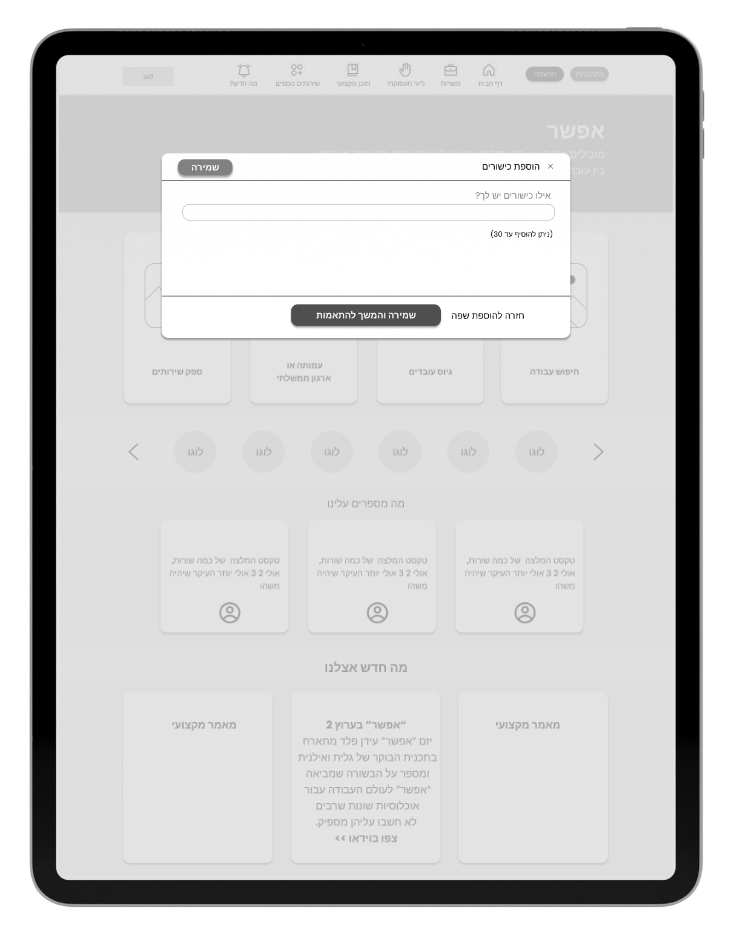
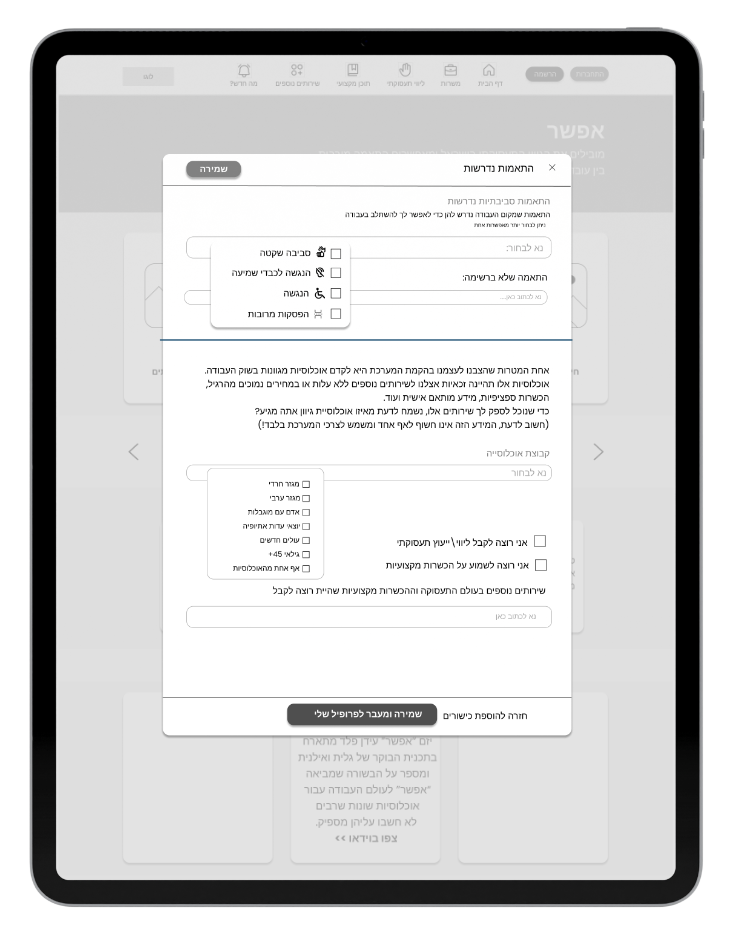
The forms will open as pop-ups, so it will be easy to close, and get back to the personal page.
Each form stands on its own and not depends on the one before him.
To update personal information, users can access the specific form from their personal page without having to start at the beginning of the process
Step 2: Switch between forms
During this phase, I decided how forms would transition between one another in two different situations: when filling all the forms at once and when updating one form.
The pop-ups will be the same for each option.
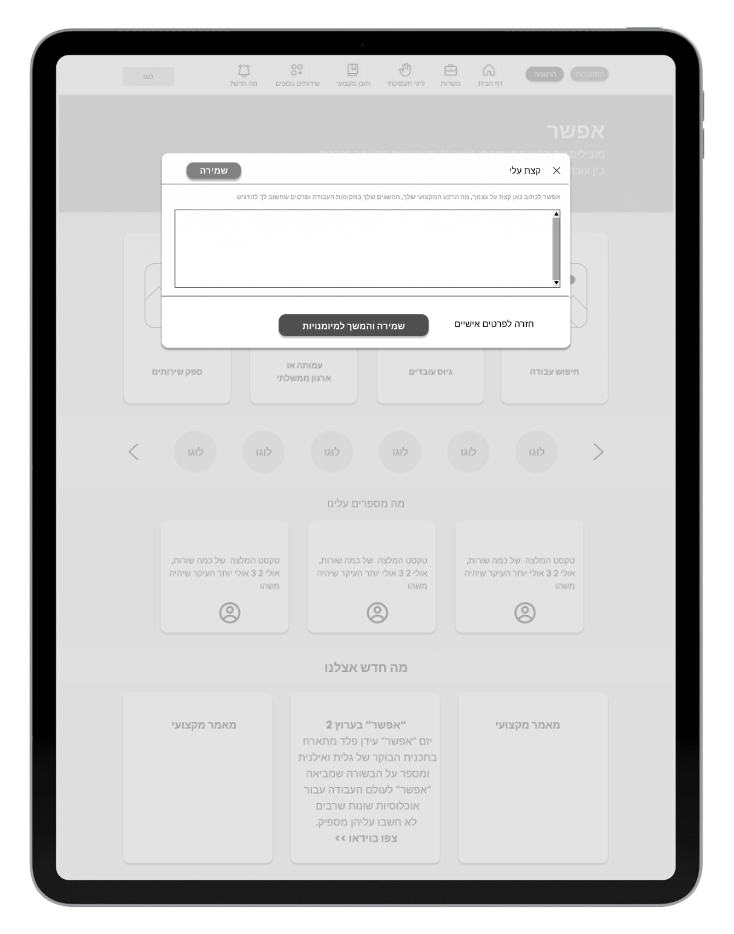
Each form will include a button for saving and forwarding to the next form, so the user can fill them with continuity.
Each form will consist of a save button and a close button, so the user can fill each form separately.
Step 3: The information
During this phase, I decided how forms would transition between one another in two different situations: when filling all the forms at once and when updating one form.
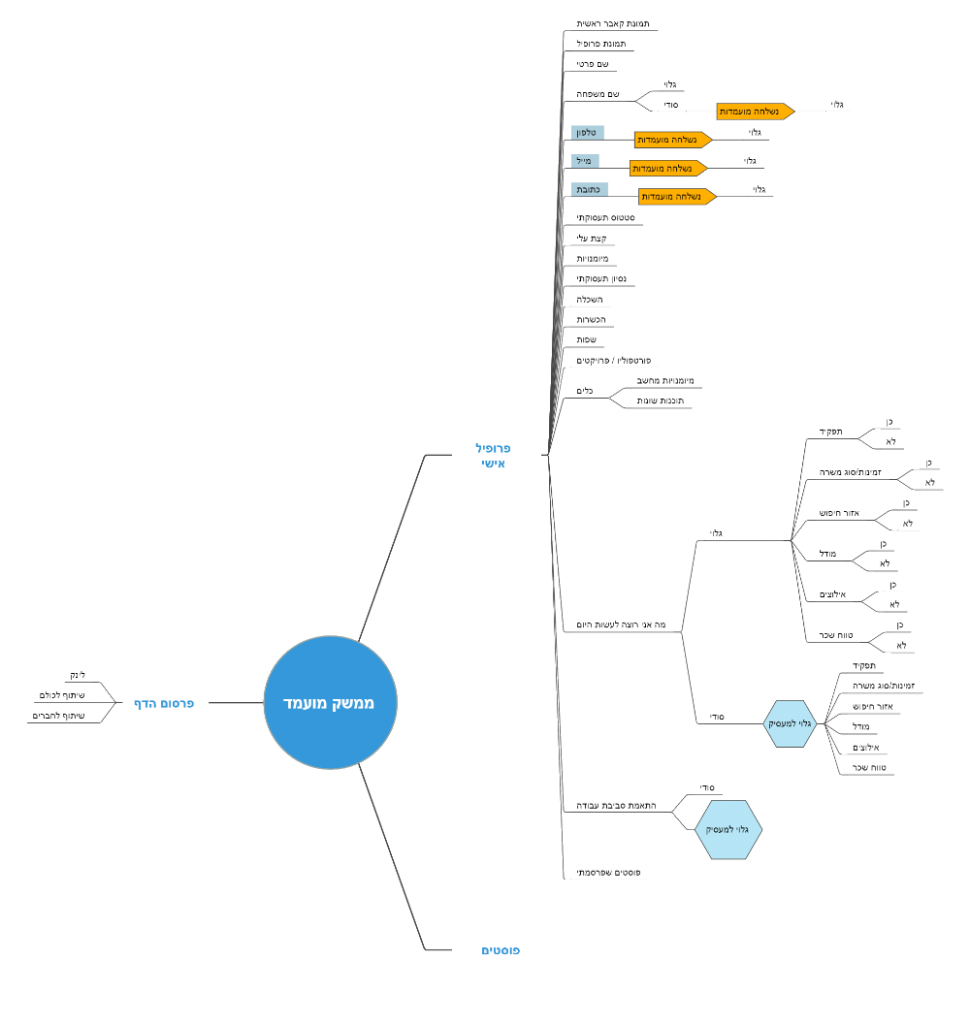
Define all the general information I want to collect for the resume.
For each form, I determined what specific information I need for this phase, and what will be required.
Since the candidates are sensitive about some of their personal details, I defined what information will be upon their choice to be seen only by employers.
Define the order of the forms.
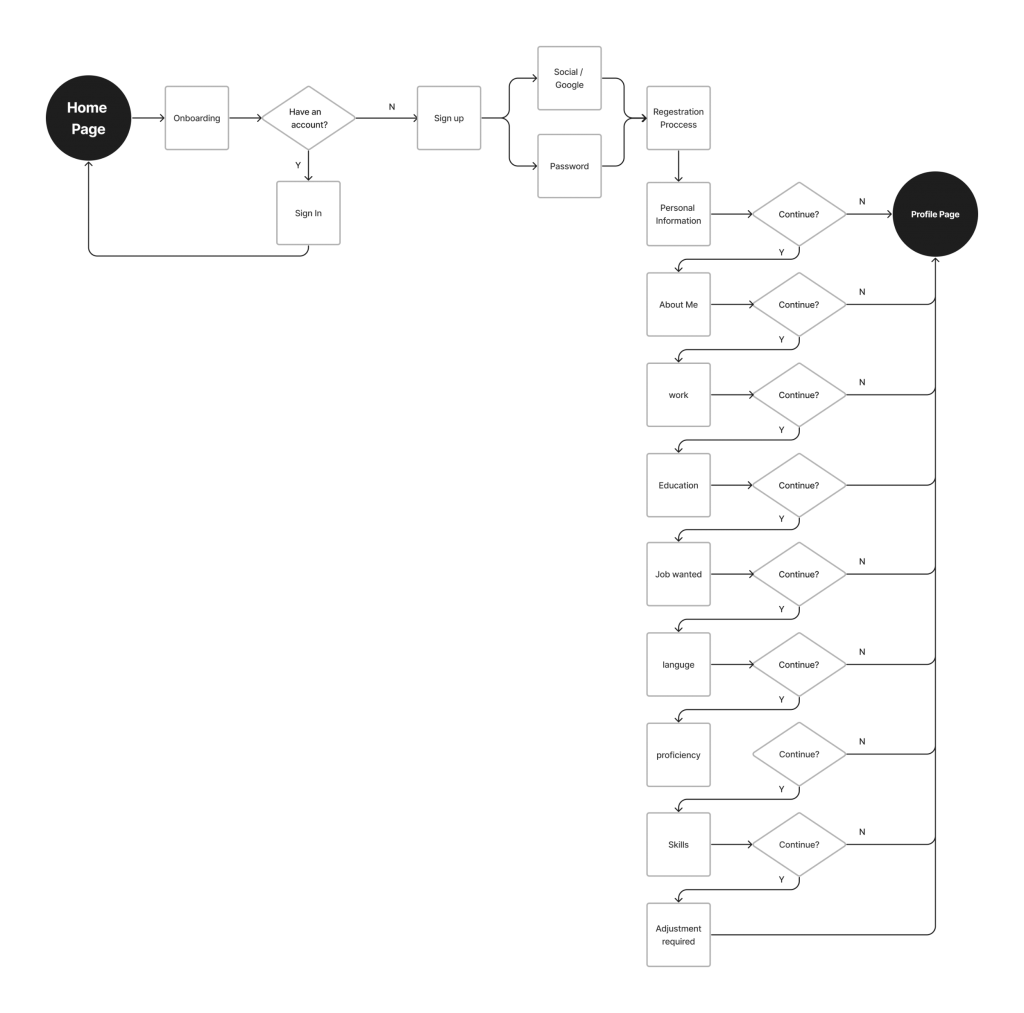
User Flow
With all this data in mind, I created the user flow to see clearly the user’s options using this process.